

Disappointing GLP-1 Results in Alzheimer’s Trial: Underscores Promise (and Limits) of Single-Agent Approaches
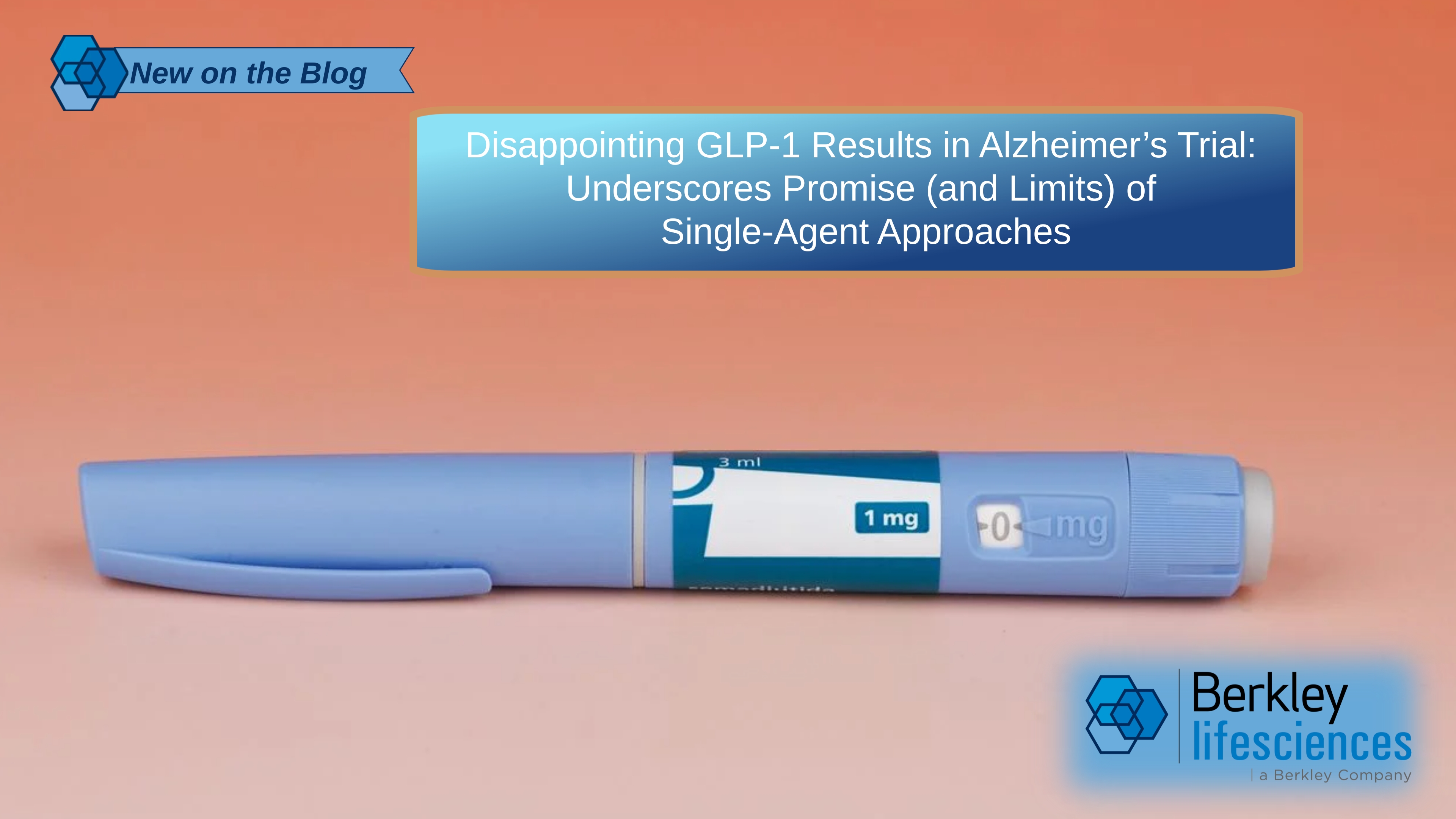
Key takeaways
- Two large Phase 3 trials (EVOKE and EVOKE+) of oral semaglutide (a GLP‑1 receptor agonist) in early Alzheimer’s disease showed no significant slowing of cognitive or functional decline vs. placebo.
- Biomarker shifts (e.g., modest reductions in inflammatory and neurodegeneration markers) were observed but did not translate into clinical benefit.
- With anti‑amyloid antibodies Leqembi (lecanemab) and Kisunla (donanemab) now FDA‑approved for early Alzheimer’s, attention is turning to combination strategies that address multiple disease pathways.
Background
Scientists have studied Alzheimer’s disease for over a century, since Alois Alzheimer’s initial description of brain abnormalities in a patient with presenile dementia. Today, amyloid‑beta plaques and tau tangles are recognized as hallmarks of the disease, though its causes are complex and multifactorial.
Anti‑amyloid therapies have recently changed the treatment landscape. The FDA granted traditional approval to Leqembi (lecanemab) in July 2023 after the Phase 3 CLARITY‑AD trial demonstrated clinically meaningful slowing of decline; and in July 2024, the FDA approved Kisunla (donanemab) for early symptomatic Alzheimer’s, based on evidence of reduced clinical decline and a limited‑duration regimen tied to amyloid plaque removal.
Against this backdrop, researchers explored GLP‑1 receptor agonists—a class of medicines widely used for diabetes and obesity—for potential neuroprotective and anti‑inflammatory effects in the brain. Preclinical and observational data suggested possible benefits, spurring rigorous clinical testing.
What the EVOKE and EVOKE+ trials found
At the 18th Clinical Trials on Alzheimer’s Disease (CTAD) conference (Dec. 1–4, 2025, San Diego), Novo Nordisk presented full Phase 3 results from EVOKE and EVOKE+, enrolling 3,808 participants with early Alzheimer’s (MCI or mild dementia) and confirmed amyloid pathology. Oral semaglutide 14 mg daily did not separate from placebo on the CDR‑Sum of Boxes (primary endpoint) or secondary cognitive/functional measures over two years. The company will discontinue the planned one‑year extension period.
While the trials were negative clinically, presenters and discussants noted biomarker changes consistent with reduced neuroinflammation (e.g., decreases in high‑sensitivity CRP) and other Alzheimer’s‑related signals—modest but statistically significant effects that did not yield measurable cognitive benefit.
Expert perspectives
Reacting to the readout, endocrinologist Daniel J. Drucker commented:
“GLP‑1 [drugs] have given us so many wonderful results, but tackling these very challenging brain disorders has been disappointing… There was a hope that we would see some benefit, and we didn’t.”
From the Alzheimer’s Drug Discovery Foundation (ADDF), Howard Fillit, MD, emphasized that “even negative trials move the field forward,” pointing to the need to target the broader pathobiology of Alzheimer’s and to consider preventive or combination approaches informed by biomarker profiles.
Novo Nordisk’s Peter Johannsen, MD, highlighted the biological signals observed and acknowledged the clinical limitations: subgroup analyses did not reveal meaningful benefit, and any potential responder group would be very small; still, he underscored the scientific rationale and the value of testing the hypothesis in large, well‑controlled trials.
Where the field goes next
The EVOKE/EVOKE+ results reinforce that single‑mechanism interventions may not be sufficient to modify Alzheimer’s course in symptomatic stages. As with other complex diseases, the next era likely involves precision, combination therapy—pairing anti‑amyloid agents with treatments aimed at metabolic, inflammatory, vascular, and synaptic pathways. Full EVOKE/EVOKE+ results are likely to be discussed further at upcoming scientific meetings (e.g., AD/PD 2026), and ongoing analyses may explore preventive settings (earlier intervention), dose/exposure considerations (e.g., injectable vs. oral regimens), and trial endpoints better tuned to metabolic mechanisms.
For more information, the Alzheimer’s Association’s educational overview on GLP‑1s captures the balanced state of the science as of late 2025. This article is informational and not medical advice. Individuals should consult their clinicians regarding diagnosis or treatment decisions.
Authored by Lisa Krist, Berkley Life Sciences, VP, Chief Customer Focus Officer